
Off-Grid Solar: Power Without the Grid
Panels charge a battery bank during the day, and your home or site runs on stored power at night — no grid connection needed.
- Free home visit
- Batteries sized to your loads
- Live in ~30 days
PM Surya Ghar empanelled installer
What Is an Off-Grid Solar System?
An off-grid (standalone) system isn't connected to the utility grid at all. Panels generate power during the day, your home uses it first, and the surplus is stored in a battery bank that keeps everything running at night and through cloudy spells.
Because there's no grid to fall back on, an off-grid system is designed for autonomy — enough battery to carry your home for one or more low-sun days. It's the right choice for farmhouses, remote sites and areas where the grid is absent or available only a few hours a day.
- Works with no grid connection at all
- 24/7 power from your own battery bank
- Ideal for farmhouses and remote sites
- Hybrid-ready inverter so you can connect to the grid later
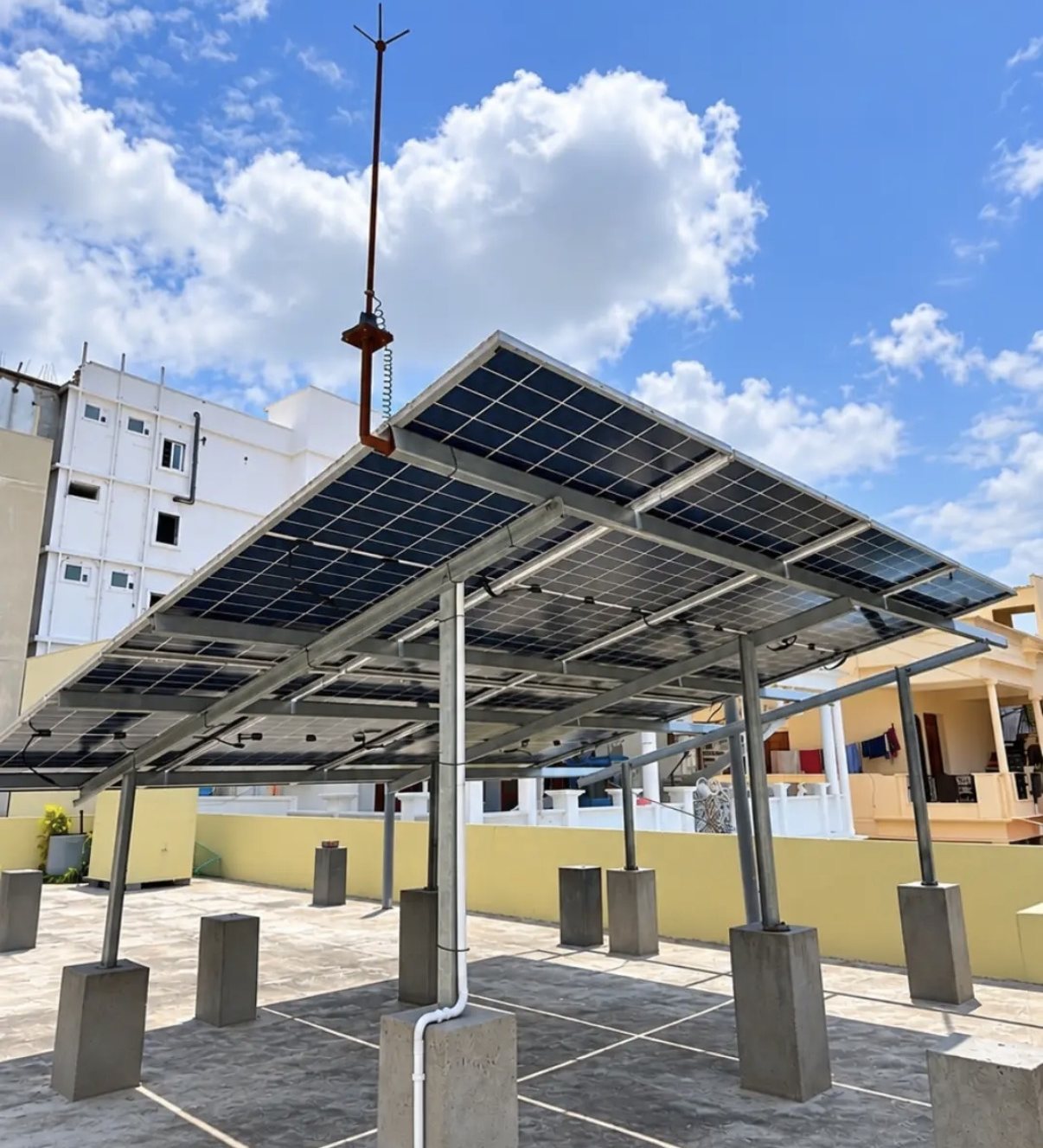
Components of an Off-Grid System
Every SolarX system uses the same proven set of parts, sized to your roof, your loads and the backup you need.
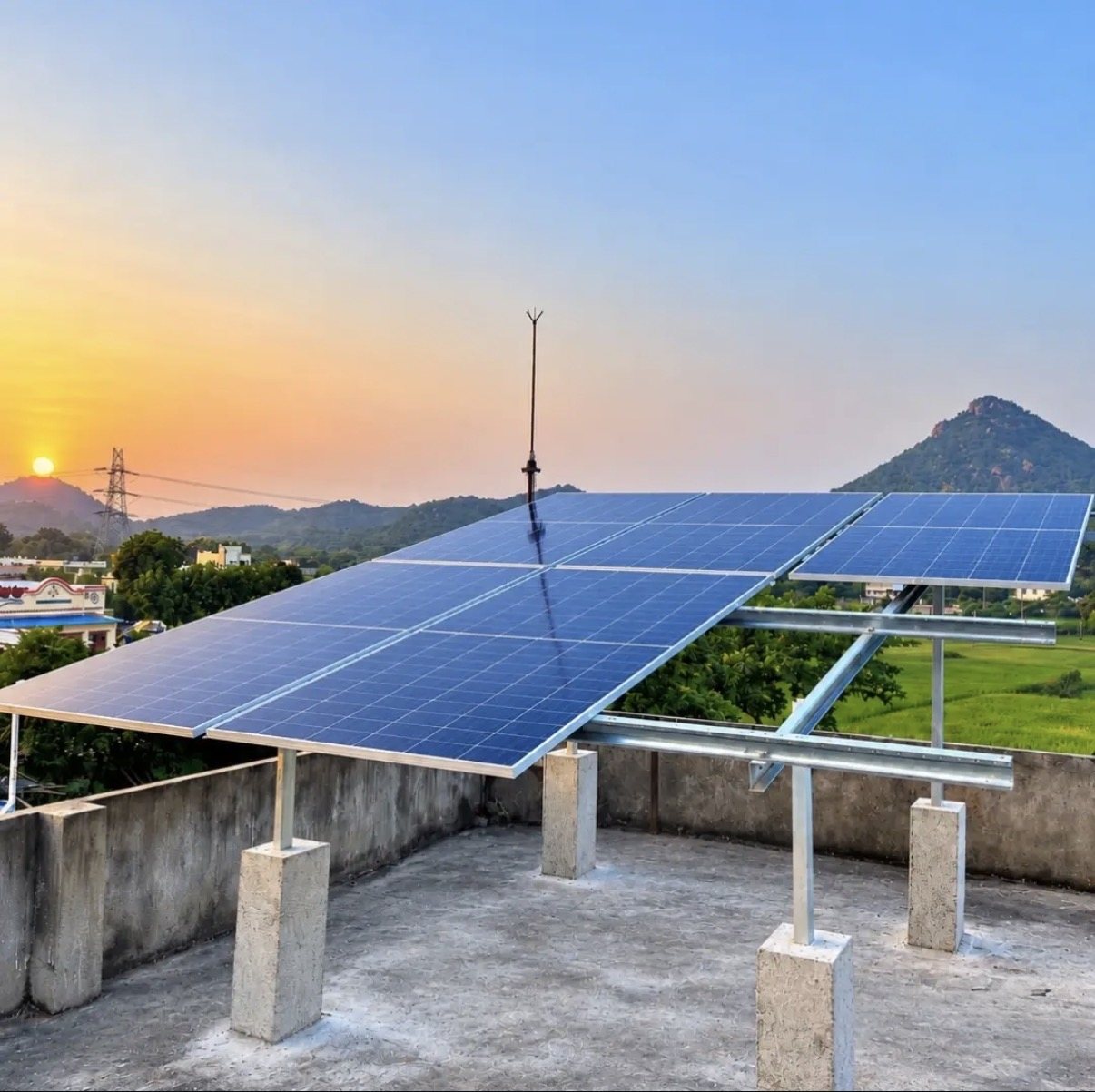
TopCon N-Type Solar Panels
Capture sunlight and turn it into DC power. Placed shadow-free so every hour of sun counts.
Off-Grid Inverter with MPPT
Converts DC to AC for your home and manages charging. Its MPPT charge controller squeezes the most out of the panels.
Lithium (LFP) Battery Bank
Stores the day's surplus so your home runs through the night and cloudy days — sized for the days of autonomy you need.
GI Mounting Structure
Cyclone-tested galvanised frame set at the right tilt for maximum sunlight.
DC & AC Distribution Boxes
Fuses, isolators and surge protection between panels, battery, inverter and your wiring.
Cables & MC4 Connectors
UV-resistant solar cabling and weatherproof connectors rated for rooftop conditions.
Earthing & Lightning Arrester
Proper earthing pits and a lightning arrester keep the system and your home safe.
Battery & Generation Monitoring
See solar output, battery charge and consumption on the inverter's app.
How an Off-Grid System Works
Watch the power flow — switch between modes to see what changes.
- Panels generate powerSunlight becomes DC electricity on your roof.
- The inverter takes chargeIt converts DC to AC and decides where every unit goes.
- Your home runs on solarAppliances use solar power first during the day.
- The battery covers the restSurplus charges the battery, which runs your home at night and on cloudy days.
☀ Sunny day: solar runs your home and the surplus charges the battery.
☾ Night / cloudy: the panels rest and the battery keeps your home running — no grid needed.
Subsidy on Off-Grid Systems
The PM Surya Ghar subsidy is only for grid-connected rooftop systems, so off-grid systems don't qualify. Here's what drives the cost instead.
Central subsidy applies to on-grid and eligible hybrid systems only
Batteries are the single largest part of an off-grid budget
You'll get up to ₹78,000 subsidy and a much faster payback — see On-Grid
Batteries
The biggest cost — typically about half the system price. Lithium (LFP) lasts far longer than lead-acid.
Days of Autonomy
How many cloudy days the battery can carry your home. More autonomy means a bigger battery.
Inverter & Sizing
Sized to your peak load — pumps, fridges and ACs need extra surge capacity to start.
On a Cloudy Day, Panels Make Only a Fraction of Their Usual Power
Output can drop to roughly 10–20% of a sunny day. That's why off-grid systems are designed for days of autonomy — the battery is sized to carry your home through one or more cloudy days in a row. Farmers looking at standalone solar pumps can also check the PM-KUSUM scheme, which subsidises off-grid pumps separately.
We size autonomy, battery and inverter after studying your loads and local weather.
Is Off-Grid Right for You?
Every roof and every family is different. Our engineers recommend the system type after reviewing your bills, power-cut pattern and roof.
- Works where there's no reliable grid
- Battery storage for day and night
- Ideal for farmhouses and remote sites
- Not eligible for PM Surya Ghar (grid-connected only)
Why Choose SolarX
Most installers cut corners you can't see for years. We don't — and we put it in writing.
TopCon N‑Type Panels
The newest panel chemistry — more power from the same roof, and it holds its output far longer than older cells.
Higher lifetime yieldGI Mounting Structure
Hot-dip galvanized iron, cyclone-tested. The cheap aluminium most installers use rusts within 5 years.
Cyclone-tested buildEnd-to-End Service
Subsidy paperwork, DISCOM approval, net-metering — we handle every step of it.
You sign onceLive in About 30 Days
Quote within 48 hours of your consult, and one project manager from survey to switch-on.
One point of contactEnd-of-Life Recycling
After 25+ years we collect your panels, recover the silicon and glass, and credit your next system.
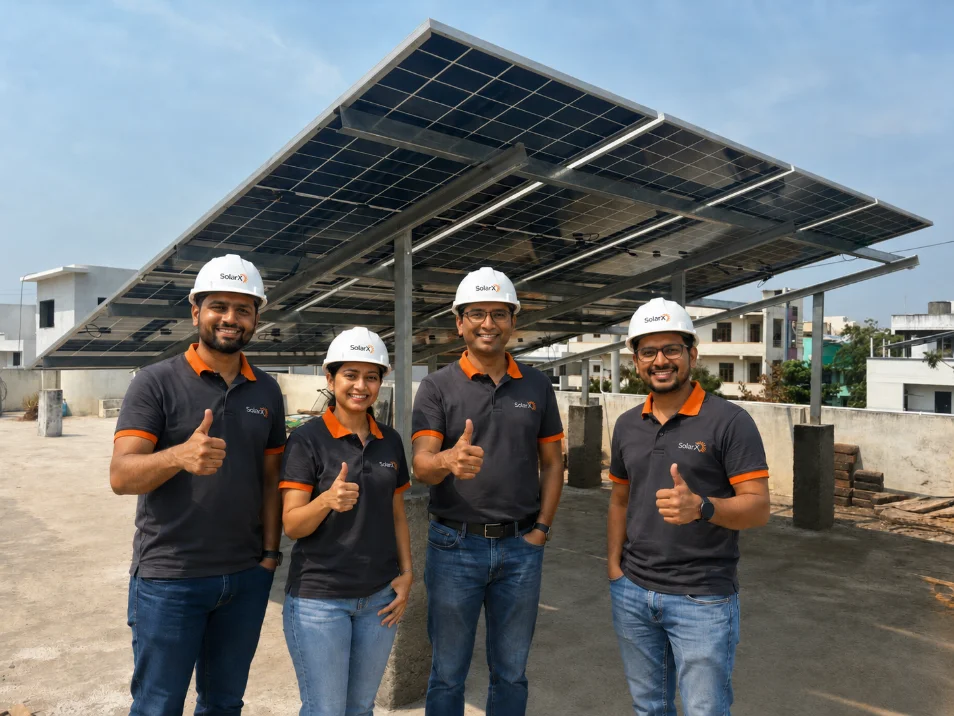
Closed-loop recoveryOne Team, Start to Finish.
Nothing left for you to chase.
We Come to YouFREE
A SolarX engineer visits your home, inspects the roof and wiring, and goes through your recent bills.
You Get a Straight QuoteFREE
System size, price, subsidy and payback on a single page. No hidden extras.
We Build It and File the Papers
Our own crew fits TopCon panels on a galvanised steel frame while we take care of the subsidy, DISCOM approval and net metering.
You Save, We Keep Watch
Your bill drops from the first month, and we come back every year for a free health check.
See Your Savings and Return
Pick a system size from 3 kW to 10 kW and a battery size to see what it costs, what it saves and how fast it pays back.
Your System
Estimates for a home off-grid system in Telangana.
Assumes ~4 units per kW per day, ~₹14,000 per kWh of lithium storage (one battery replacement in year 13 is included), tariffs rising 2% a year and 0.5% yearly panel degradation. Off-grid savings are measured against the grid or diesel power you'd otherwise use. Indicative only.
Book a FREE Consultation